What Is Bandwidth in TRON? Free Limit, Cost per Transfer and How to Get More
Bandwidth in TRON pays for the size of every transaction. Here is how much a USDT transfer uses, how the free 600 a day works, and what you pay when it runs out.
In short: bandwidth in TRON is the resource that pays for the size of a transaction in bytes. Every transaction uses it, including plain TRX transfers and USDT TRC-20 transfers. A USDT transfer uses about 345–360 bandwidth. Every activated address gets 600 free bandwidth per day, which covers roughly one USDT transfer. Once that allowance is spent, the network burns TRX at 1,000 sun per unit, about 0.35 TRX per USDT transfer. Bandwidth is the small line on the bill; energy is the big one, but at volume both matter.

What is bandwidth in TRON
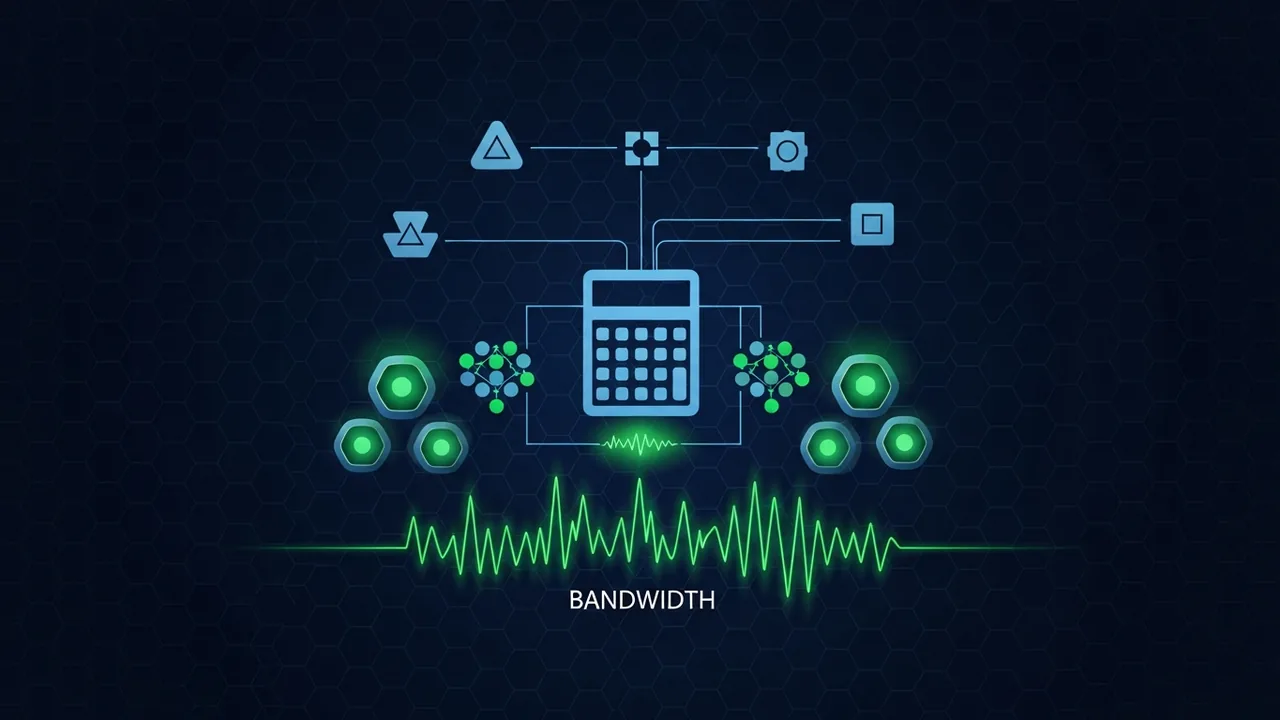
TRON does not charge a flat transaction fee. It charges for resources. There are two: bandwidth and energy. Bandwidth measures how much space your transaction takes up on the network. One unit of bandwidth corresponds to one byte of transaction data. The bigger the transaction, the more bandwidth it consumes.
Every transaction has a size, so every transaction needs bandwidth. A simple TRX transfer between two wallets needs only bandwidth, because it does not run a smart contract. A USDT TRC-20 transfer needs bandwidth for its bytes and energy for the contract call. That is why people who only ever send TRX rarely hear about energy, while anyone sending USDT runs into both.
Like energy, bandwidth is not a coin. You cannot send it or trade it. It is a balance attached to an address that a transaction draws down. If the balance is not enough, the network burns TRX from the same address to cover the difference. The underlying units, including sun, are explained in TRON fees: energy, bandwidth and sun.
Why charge for size at all? Every transaction has to be stored and passed between nodes, and larger transactions put more load on the network. Charging per byte keeps spam expensive while the free daily allowance keeps ordinary use cheap. It is the same idea as postage by weight, with a small free quota for everyone.
Bandwidth vs energy: the difference
Here are the two resources side by side for a single USDT TRC-20 transfer. Each line reads: resource — what it pays for — typical use per USDT transfer — cost when you lack it.
- Bandwidth — transaction size in bytes — about 345–360 units — 1,000 sun per unit, about 0.35 TRX
- Energy — smart-contract execution — about 64,285 units to an address with USDT, about 130,285 to one without — 100 sun per unit, about 6.43 TRX or 13.03 TRX
The comparison makes the priorities clear. Energy is roughly 95% of a USDT transfer's burn cost, and bandwidth is the remaining few percent. Bandwidth also has something energy does not: a free daily allowance that covers a light user completely. For the full practical comparison, read bandwidth vs energy on TRON: which one you need, and for energy itself, our guide to what TRON energy is.
How much bandwidth a transaction uses
Bandwidth depends on the size of the transaction, not on the amount of money moved. A 10 USDT transfer and a 100,000 USDT transfer use the same bandwidth.
- USDT TRC-20 transfer: about 345–360 bandwidth, depending on the exact fields and signature
- Plain TRX transfer: bandwidth only, no energy, since no contract runs
- Transactions with more data or more signatures, such as multi-signature wallets, are larger and use more bandwidth
Because the number is small and fairly stable, bandwidth is easy to plan. The harder part is knowing when your free allowance has run out.
Free bandwidth: 600 units a day
Every activated TRON address receives 600 free bandwidth per day. That covers roughly one USDT transfer, or several simple TRX transfers. The allowance renews daily, so an address that sends one USDT transfer a day may never pay anything for bandwidth.
Two details catch people out. First, the allowance belongs to activated addresses only. A brand-new address that has never been activated on-chain has no free bandwidth to draw on, which is one reason activation matters; see how to activate a new TRON wallet. Second, the allowance is per address, not per person. If you send ten transfers from one wallet, the first one is covered and the rest are not.
Free bandwidth covers about one USDT transfer a day per address. Everything beyond that is paid in TRX unless the address has its own bandwidth.
What happens when bandwidth runs out
If the address has used its free allowance and has no staked or delegated bandwidth, the transaction still goes through as long as the address holds TRX. The network burns TRX at 1,000 sun per bandwidth unit. For a USDT transfer of about 345–360 units, that is about 0.35 TRX.
This is the most common reason people see a small TRX deduction after renting energy. The energy covered the contract, but the bandwidth for the transaction bytes had to be paid separately. If that happened to you, our checklist in TRX burned even though I had energy helps pin down the cause. And if the address holds no TRX at all, the wallet cannot pay for bandwidth and will refuse to send, even if energy is fully covered.
How much bandwidth costs: 1, 10 and 100 transfers a day
Here is what bandwidth costs from a single address per day, assuming about 345–360 units per USDT transfer and 600 free units, which cover about one transfer.
- 1 transfer a day: covered by free bandwidth, 0 TRX
- 10 transfers a day: about 9 paid transfers × 0.35 TRX = about 3.15 TRX a day
- 100 transfers a day: about 99 paid transfers × 0.35 TRX = about 34.65 TRX a day
Put this next to energy for perspective. At 100 transfers a day to addresses that hold USDT, burning energy costs about 643 TRX, while renting 65,000 energy per transfer on Overtron costs about 226 TRX at the rate as of Oct 14, 2026. Bandwidth adds about 35 TRX in both cases. So the first saving to chase is always energy, and bandwidth is the second. The full per-transfer breakdown is in how much a USDT TRC-20 transfer costs in 2026.
How to get TRON bandwidth
There are four ways to cover bandwidth. Each line reads: method — cost — trade-off.
- Free daily allowance — free — about one USDT transfer a day per activated address
- Burning TRX — about 0.35 TRX per USDT transfer — nothing to set up, just keep TRX on the address
- Renting bandwidth — a fee per package — useful for many transfers in a short period
- Staking TRX for bandwidth (Stake 2.0) — no per-transfer fee — locks TRX, and unstaking takes 14 days
Under Stake 2.0 you choose whether frozen TRX gives you energy or bandwidth. Staking for bandwidth makes sense only for addresses that send a lot and already hold TRX long term. The general trade-offs of staking versus renting are covered in TRX energy: staking vs renting; the same logic applies to bandwidth. For most people, the free allowance plus a small TRX reserve is enough.
Do you need to think about bandwidth? It depends on how you send
- You send USDT once a day or less: the free 600 bandwidth covers you. Focus on energy and ignore bandwidth.
- You send a few USDT transfers a day from one wallet: the first is free, the rest cost about 0.35 TRX each. Keep 2–3 TRX on the address as a buffer.
- You run payouts or trade actively, dozens of transfers a day: bandwidth becomes a visible daily cost. Budget for it, or cover it with rented or staked bandwidth.
- You just created a wallet: activate it first, otherwise there is no free allowance and every transaction pays for bandwidth in TRX.
A useful habit is to check the resources section of the sending address before a series of transfers. If free bandwidth is already used and the address holds almost no TRX, top it up before you start, so a transfer does not fail halfway through a batch.
How to check bandwidth on your address
- Copy your TRON address from your wallet.
- Open it in a block explorer such as Tronscan.
- Find the resources section. It shows free bandwidth left for today, any staked or delegated bandwidth, and available energy.
- If free bandwidth is below about 360 and you have no other bandwidth, your next USDT transfer will burn about 0.35 TRX.
- Make sure the address holds at least that much TRX, or add bandwidth before sending.
A step-by-step walkthrough of the explorer screens is in our Tronscan guide to transactions and resources.
How to handle bandwidth and energy with Overtron
Overtron covers the expensive part, energy, and helps you keep the address ready for the small part, bandwidth.
- Open @overtronbot or the TRON energy rental page.
- If the sending address is new, activate it in the bot so it gets its free daily bandwidth.
- Top up your balance. It is held in TRX and can be funded with USDT, BTC or ETH.
- Rent energy for the transfer: 65,000 for an address that holds USDT, 131,000 for one that does not. As of Oct 14, 2026, that costs 2.26 TRX and 4.56 TRX for 15 minutes.
- Keep a small TRX reserve on the sending address, about 0.35 TRX per transfer beyond the first each day, or rent bandwidth in the bot if you send many transfers in a row.
- Send USDT from your usual wallet. No private key is needed at any step.
If you send through the day, smart mode keeps energy on the address and refills it after each transfer, billed per transfer. Businesses can order resources through the business API. For a full list of fee-cutting methods, see how to reduce USDT TRC-20 fees, or go straight to rent TRON energy for your next transfer.
Common misconceptions about TRON bandwidth
- "Bandwidth replaces energy." It does not. Without energy, a USDT transfer still burns about 6.43 TRX however much bandwidth you hold.
- "Free bandwidth means free transfers." Only for about one USDT transfer a day per address, and only for the bandwidth part.
- "Bandwidth depends on the amount." It depends on transaction size in bytes, not on how much USDT you send.
- "TRX transfers are free." They are free only while the free bandwidth lasts; after that they burn TRX for bandwidth too. See how much TRON charges per transaction.
延伸阅读
How Much a USDT TRC-20 Transfer Costs in 2026: A Formula Built on Live Network Parameters

P2P USDT Arbitrage: How TRON Network Fees Eat Your Spread
How to Send USDT Without TRX in Your Wallet: GasFree, Energy Rental, and Burning — Every Route
Why Sending USDT to an Empty Wallet Burns Twice the Energy: 64,285 vs 130,285

TRON Fees Explained: Energy, Bandwidth, and SUN in Plain English

Reading Tronscan Like a Pro: Transactions, Resources, Delegation, Permissions
What is bandwidth in TRON?
Bandwidth is the TRON resource that pays for the size of a transaction in bytes. Every transaction uses it, including TRX and USDT transfers.
How much bandwidth does a USDT TRC-20 transfer use?
About 345–360 bandwidth. The amount depends on transaction size, not on how much USDT you send.
How much free bandwidth does TRON give?
Every activated address gets 600 free bandwidth per day, which covers roughly one USDT transfer. A new address that has not been activated has no free allowance.
What happens if I run out of bandwidth?
The network burns TRX at 1,000 sun per unit, about 0.35 TRX per USDT transfer. If the address has no TRX, the wallet will not send.
Is bandwidth the same as energy?
No. Bandwidth pays for transaction bytes; energy pays for smart-contract execution. A USDT transfer needs both, and energy is by far the larger cost.
Why was TRX deducted after I rented energy?
Most often because the free 600 daily bandwidth was already used, so the network burned about 0.35 TRX for the transaction's bandwidth. Keep a little TRX on the sending address.