Received Dirty USDT? What to Do When Tainted Funds Land in Your TRC-20 Wallet
Got USDT with a risky history, or did an exchange freeze your deposit? A step-by-step guide: what to check, what to document, when to return funds to the sender, and why bouncing them between wallets backfires.
Short answer: if you received dirty USDT, what to do depends on where the funds sit. One rule applies in every case: do not bounce the funds between wallets and do not split the amount. Check the addresses against the Tether blacklist and with an AML service, save the TXID and anything that proves where the transfer came from, and contact the sender. If an exchange froze your deposit, answer its compliance team with documents, not with new transfers.
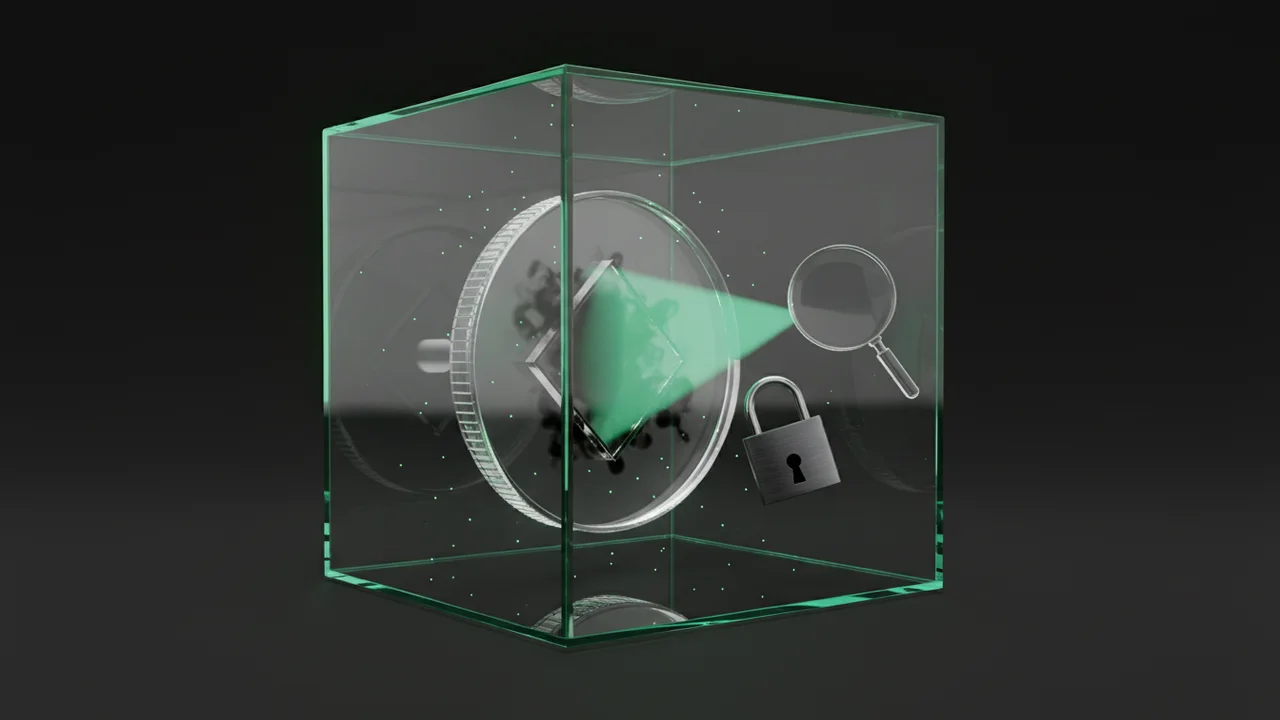
What "dirty" USDT means and where it comes from
The blockchain itself does not label coins: USDT on one address is technically identical to USDT on another. Analytics firms and exchange compliance teams call funds "dirty" when an address's history connects to risky sources. They map the transfer graph and look at which addresses the money passed through before it reached you.
Funds are most often flagged when they are linked to:
- fraud, hacks and thefts, including addresses victims have already reported;
- addresses on sanctions lists;
- mixers and other services built to obscure the trail;
- darknet markets and illegal services;
- addresses Tether has already frozen.
A key detail: risk is scored along the chain. You may have sold goods honestly or closed a fair P2P trade, yet your counterparty paid you with USDT that passed through a problem address a few hops earlier. To the analytics, that still counts as exposure, even though you had nothing to do with it.
Two different outcomes: a Tether freeze vs. an exchange hold
"My USDT got frozen" can describe two very different situations, and each calls for a different response.
- A Tether contract freeze. The issuer adds the address to a blacklist inside the USDT smart contract itself. After that, USDT on that address cannot be sent anywhere, not to an exchange and not back to the sender. This is usually done at the request of law enforcement.
- An exchange or service hold. Your address is free on-chain, but the exchange ran your deposit through AML screening and is holding the funds on its side pending review. Here the decision belongs to that platform's compliance team.
How to check an address against the Tether blacklist in advance and what an AML score shows is covered in our guide on how to check USDT TRC-20 for AML and freeze risk. This article covers what to do once the transfer has already arrived.
Received dirty USDT: what to do in the first hours
- Don't move anything in a hurry. A series of transfers "to clean the funds" doesn't work: analytics see the whole chain, and splitting the amount across several wallets looks like an attempt to hide the trail, which only raises suspicion.
- Figure out which case you're in: whether your address and the sender's address are on the Tether blacklist, and what an AML check of the incoming transaction shows.
- Save the TXID, date, amount and sender address. Take a screenshot of the transaction page on Tronscan.
- Gather proof of origin: chat history, a contract or invoice, the P2P order, any record of what you were paid for.
- Contact the sender or counterparty and ask where the funds came from. Save their answer and how they reacted.
- If the amount matters to you, talk to a lawyer who works with crypto assets in your jurisdiction.
Where to find the TXID, how to read its status and how to make sure you received real USDT rather than a look-alike spam token is explained in how to check a TRC20 transaction.
If the USDT arrived in your personal wallet
If Tether hasn't frozen the address, the funds are technically available and you can send them. But any exchange or exchanger you send them to later may reject or hold the deposit. So make your decision before the next transfer, not after it.
Returning funds to the sender: when it makes sense
If the transfer was unexpected, mistaken, or came from a counterparty whose deal isn't closed yet, a refund is often the cleanest way out. Return the same amount to the same address the funds came from, and keep the TXID of the refund.
Be careful with requests to send the money back "to a different address." It's a known scheme: someone sends tainted USDT to your wallet, then asks you to return it to a new address. The result is a suspicious chain running through your wallet, with you as one of its links. Refunds go only to the original address.
Keep it separate from clean funds
AML screening looks at an address's full history. If a risky transfer sits in the same wallet as your regular USDT, your whole balance may come under suspicion when you send it to an exchange. Until things are clear, don't send other payments from that address and don't top it up with new funds.
If an exchange froze your deposit
The exchange usually sends a request through support or a verification section: where the funds came from, what they were for, and who the sender is to you. Stay calm and stick to the facts:
- Reply only through the exchange's official channel and only to its requests. "Helpers" who message you and promise to unlock funds for a percentage are scammers.
- Attach documents: chat history, the P2P order, a contract, invoices, statements. The clearer the story, the easier the review.
- Don't open new accounts or try to push the same funds through another platform. That looks like dodging the review.
- Timelines vary with the exchange, the amount and how complete your answers are. Nobody promises a fixed deadline.
Outcomes vary too: the funds may be released, returned to the original address, or held at the request of law enforcement. The only thing you control is how complete and honest your answers are.
If your address is on the Tether blacklist
USDT on a blacklisted address cannot be sent: the transfer fails, but the network still charges resources for the execution attempt. Retrying is pointless; you'll only spend energy or TRX.
The blacklist applies only to the USDT token. It doesn't freeze TRX or other tokens on that address, and you can move them to a new wallet. Lifting a freeze goes through Tether and usually requires law enforcement involvement and documents proving where the funds came from.
Dirty USDT in a P2P trade: a common scenario
Tainted USDT most often arrives when you buy on P2P outside an exchange's escrow, or from a random seller on Telegram. The seller gets your money, and you get USDT with a history you knew nothing about. Inside exchange escrow the risk is lower: sellers pass the platform's checks and disputes go to arbitration.
If you're on the other side, selling USDT and cashing out to fiat, there are risks there too. See our guide on how to withdraw USDT TRC20 to a bank card.
How to lower the risk next time
- Check the counterparty's address before the deal, not after: the Tether blacklist plus an AML service.
- When possible, ask to be paid from an exchange account rather than a personal wallet with an unknown history.
- Keep separate addresses for different counterparties or tasks, so one problem transfer doesn't taint your whole balance.
- Keep records for every deal: chats, orders, invoices.
- If you accept payments as a business, screen incoming deposits with an AML service automatically.
Why extra transfers also cost you
Every USDT TRC-20 transfer uses network resources: about 64,500–65,000 energy to an address that already holds USDT, and roughly twice that, about 131,000, to an empty address. Without energy, the network burns about 6.5 TRX, or about 13 TRX for a transfer to an empty address. A refund to the sender plus a later transfer to an exchange is already two transfers, and a chain of "cleaning" transfers adds costs at every hop while cleaning nothing.
If you do need to send a transfer, for example a refund to the sender, it's cheaper to cover the fee with energy than to burn TRX. TRON energy rental is delegated to your address for the period you choose, and no private keys are needed.
Dirty USDT is a reason for care, not panic: fewer transfers, more documents, and refunds only to the original address.
To keep any necessary USDT transfer from burning TRX, get energy for that specific transaction in @overtronbot. Sizing it for your address takes about a minute.
Read also

How to Check USDT TRC-20 for AML Risk and Freeze Before Transferring
Does the Recipient Pay the USDT Fee? Who Pays for a TRC-20 Transfer and Where Activation Fits In
How to Swap USDT to TRX: Every Option and Its Real Cost — Bot, DEX, Exchange, P2P

Accept USDT TRC20 Payments in a Bot or Service: Addresses, Fees, Mistakes
Transfer USDT Between Your Own Wallets: How to Move It for Less
Ledger USDT TRC20 and Trezor: Fees, TRON Energy and Safe Transfers
What does "dirty" USDT mean?
It's USDT whose history connects to risky sources: fraud, hacks, sanctioned addresses, mixers or addresses that are already frozen. The blockchain doesn't label coins; analytics firms and exchange compliance teams score them based on the transfer chain.
I received dirty USDT. What should I do?
Don't move the funds in a hurry or split the amount. Check the addresses against the Tether blacklist and with an AML service, save the TXID and proof of where the transfer came from, and contact the sender. If the amount is significant, consult a lawyer.
Can Tether freeze my wallet because of an incoming transfer?
Tether freezes specific addresses, usually at the request of law enforcement. An incoming transfer from a risky address doesn't automatically mean a freeze, but it does raise the chance that an exchange will hold your deposit.
Can I send dirty USDT back to the sender?
Yes, if the address isn't frozen. Return the same amount to the same address the funds came from and keep the refund TXID. A request to send the money to a different address is a red flag for a scam.
Why did the exchange freeze my USDT deposit?
Exchanges screen incoming deposits with AML scoring. If the transfer's history connects to risky addresses, the funds are held for review and the exchange asks for documents proving their origin.
How long does an exchange deposit review take?
There's no fixed timeline. It depends on the exchange, the amount and how fully you answer the request. Reply only through the exchange's official channel.
Can sending USDT through several wallets "clean" it?
No. Analytics see the entire chain, and splitting amounts or running a series of transfers looks like an attempt to hide the trail. It only raises suspicion and adds energy or TRX costs at every hop.
What happens to TRX on an address Tether has frozen?
The Tether blacklist applies only to the USDT token. You can move TRX and other tokens from that address, but you can't send USDT: the attempt fails, and the network still charges resources for it.
Can Overtron check or unfreeze USDT?
No. Overtron rents out energy and bandwidth for transfers on the TRON network. Address checks are done by AML services, and freezes are lifted by Tether or the exchange's compliance team.