How to Swap USDT to TRX: Every Option and Its Real Cost — Bot, DEX, Exchange, P2P
How to swap USDT to TRX through a bot, a DEX in your wallet, a centralized exchange, or P2P: what the real cost of the swap is made of, where fees hide, and when you don't need to swap at all.
Short answer: you can swap USDT to TRX in four ways — a swap inside a Telegram bot or service, a DEX straight from your wallet, a centralized exchange, or an exchanger and P2P. The real cost is more than the rate: add the spread, the platform fee, the network cost of sending USDT, and the TRX withdrawal fee. And if you only need TRX to pay for USDT transfers, you often don't need to swap at all — renting energy is cheaper.
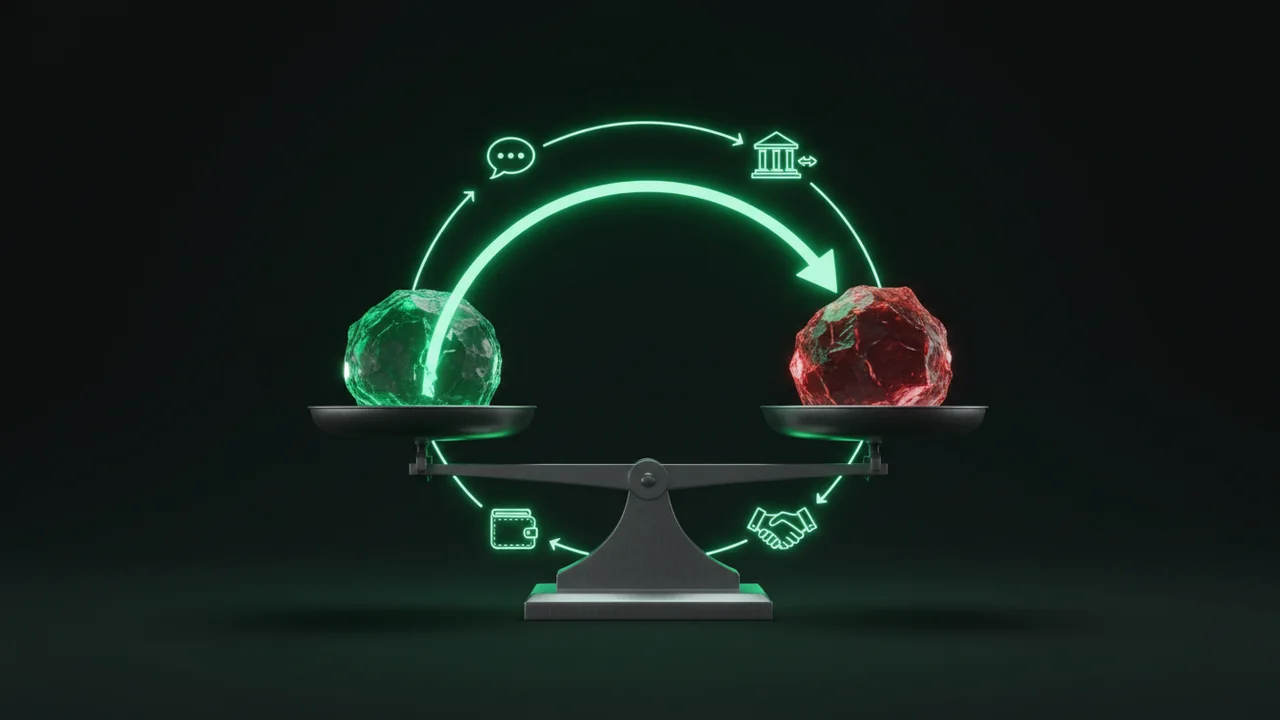
Why people swap USDT to TRX in the first place
Most people searching for how to convert USDT to TRX are not planning to hold TRX as an asset. The task is practical: there is USDT TRC-20 in the wallet, and the TRON network charges fees in TRX. With no TRX and no energy, a USDT transfer simply won't go through — the wallet shows an "insufficient TRX for network fee" error.
The typical scenarios: you need to send USDT and the address holds zero TRX; you need a small TRX reserve for bandwidth and activating new addresses; a service or exchanger needs TRX for payouts and sweeping deposit addresses. The scenario decides which swap route makes sense — and whether you need a swap at all.
What the cost of swapping USDT to TRX is made of
Comparing platforms by the rate alone is a common mistake. What counts is how much TRX actually lands in your wallet for the USDT you gave up. Money leaks in several places along the way:
- Rate and spread — the gap between the market price and the price the platform gives you. Exchangers and bots usually build the spread into the rate instead of showing it as a separate line.
- Platform fee — the exchange's or DEX pool's percentage per trade.
- Network cost on the USDT side — sending USDT to an exchange or exchanger is a TRC-20 transfer: about 64,500–65,000 energy to an address that already holds USDT, or about 6.5 TRX burned if you have no energy.
- TRX withdrawal fee — exchanges charge a flat amount, and on a small swap it can eat a noticeable share.
- Slippage — on a DEX, the final rate can differ from the quote if the price moves while the transaction is being included in a block.
Rule of thumb: compare the outcome, not the rate — how much TRX reached your address for a given amount of USDT, including every transfer in and out.
The catch-22: you can't send USDT without TRX
The main trap: to swap USDT to TRX, you usually have to send the USDT somewhere first. And sending USDT requires energy or TRX to burn. It's a loop — especially for a fresh wallet with no TRX at all.
There are three ways out: rent energy and pay for it from another source; swap where your USDT already sits (on an exchange, if it's there); or use a service that covers network costs for a separate fee.
Every way to send USDT with zero TRX in the balance, including GasFree and energy rental, is covered in how to send USDT without TRX.
Option 1. Swap USDT to TRX in a Telegram bot or service
The shortest path: you send USDT to the service and receive TRX at the address you specify, or you swap inside your account balance. No exchange sign-up or KYC, a simple interface, and the whole swap happens in one window.
- Pros: fast, no exchange KYC, convenient for small amounts and one-off tasks.
- Cons: the service sets the rate and the spread is built in; you have to trust the platform while it holds your funds.
- What to check: the final TRX amount before you confirm, the minimum swap amount, and your swap history in the account.
In Overtron, the USDT ↔ TRX swap lives in the same account where you buy energy: balance and history are shared between the website and the bot, with no separate sign-up.
Option 2. A DEX straight from your wallet
Decentralized exchanges on TRON (SunSwap, for example) let you swap USDT to TRX from TronLink or another wallet with no middleman: you sign a transaction and the pool's smart contract sends you TRX. Your funds never sit on someone else's balance.
The price of that convenience is energy. A DEX swap is a smart contract call, not a simple transfer, and it usually costs more energy than a USDT transfer. Before your first swap, the wallet asks for an approve — permission for the contract to spend your USDT — and that is one more transaction that consumes resources.
- Pros: no middleman and no KYC, market rate, funds stay under your control.
- Cons: energy spent on the approve and the swap itself, slippage, the risk of signing a fake contract.
- What to check: the pool address and the DEX domain, your slippage tolerance, the approve amount.
How many resources a swap and other contract calls consume is broken down in TRON energy for swaps and contracts.
Option 3. A centralized exchange: spot trade and TRX withdrawal
If your USDT is already on an exchange, this is often the simplest route: buy TRX on the spot market and withdraw it to your wallet. No USDT transfer on TRON is needed, so there is no energy cost on the sending side.
If the USDT is in your own wallet, you first have to deposit it to the exchange (a TRC-20 transfer that needs energy or burns TRX), then buy TRX and withdraw. Every exchange sets its own withdrawal fee and changes it over time — check it on the withdrawal page before you trade.
- Pros: deep liquidity, a transparent rate, convenient for large amounts.
- Cons: verification, a flat withdrawal fee, two extra steps if your USDT isn't on the exchange.
- What to check: that the TRON (TRC-20) network is selected for the withdrawal, the withdrawal fee, the recipient address.
Option 4. Exchangers and P2P
Exchangers and P2P platforms swap USDT to TRX directly with another person or service. They help when an exchange isn't available, but they carry the most variables: spreads differ between counterparties, and the deal requires trust.
- Pros: no exchange account needed, you may find a good rate on volume.
- Cons: spreads are often wider than on exchanges, the risk of a dishonest counterparty, AML risk on the funds you receive.
- What to check: the platform's reputation, the deal terms before you send anything, the counterparty address's risk score.
Comparing the ways to convert USDT to TRX
- Bot or service — for small amounts and one-off tasks, when speed matters and you'd rather skip exchange verification.
- DEX — when you want to swap with no middleman and are ready to pay for contract energy and watch slippage.
- Exchange — when your USDT is already there or the amount is large and the market rate matters.
- Exchanger and P2P — when the other routes aren't available; requires vetting the counterparty.
There is no universally best route: on small amounts, flat costs (withdrawal, network fee) decide; on large amounts, the spread and the rate do.
When you don't need to swap USDT to TRX at all
If you need TRX only to send USDT, a swap is a detour. Without energy, the network burns about 6.5 TRX per USDT transfer to an address that holds USDT, and about 13 TRX to an empty address. That's exactly the amount people try to "top up" with a swap.
The alternative is energy: a USDT transfer to an address that already holds USDT uses about 64,500–65,000 energy, and roughly twice that (about 131,000) to an empty address. Rented energy is delegated to your address, and the transfer goes through without burning TRX. The rental price depends on the market, but in a typical situation it is noticeably lower than the TRX that would be burned.
If your goal is to send USDT regularly rather than hold TRX, it's easier to buy TRON energy for the number of transfers you need. How much TRX the network charges for different operations is covered in TRX fee: how much TRON charges per transaction.
How much TRX to keep after the swap
Even if energy covers your USDT fees, a small TRX reserve is useful. A simple transfer uses about 345–360 bandwidth, and the network gives 600 free bandwidth per day — enough for a couple of operations, not more. Once the free allowance runs out, bandwidth is paid by burning TRX.
TRX is also needed to activate new addresses and for operations that have no delegated energy. Keep enough to cover your usual activity for a week or two — there's no point stockpiling TRX for fees when energy rental exists.
Common mistakes when swapping USDT to TRX
- Comparing platforms by rate and forgetting the withdrawal fee and network costs.
- Swapping a small amount on an exchange where the flat withdrawal fee eats a large part of it.
- Signing an unlimited approve on an unfamiliar DEX site — many theft schemes work exactly this way.
- Picking the wrong network when withdrawing from an exchange: TRX must be withdrawn on TRON.
- Sending USDT to an exchanger without checking its terms and reputation.
- Swapping USDT to TRX just to pay a single fee, when a one-time energy rental solves the same problem.
Pre-swap checklist
- Define the goal: hold TRX or just send USDT. In the second case, price out energy rental first.
- Calculate the outcome: how much TRX will reach your address after all fees.
- Check the network, the recipient address, and the platform address (contract, domain).
- On a DEX, set a reasonable slippage tolerance and a limited approve.
- After the swap, confirm the deposit by transaction hash on Tronscan.
If you need TRX for USDT transfers, try renting energy instead of swapping in the Telegram bot @overtronbot: energy is delegated to your address, your keys stay with you, and you can swap USDT to TRX in the same place if you need to.
Read also

TRON Energy for Swaps and Contracts: What Operations Beyond a USDT Transfer Cost
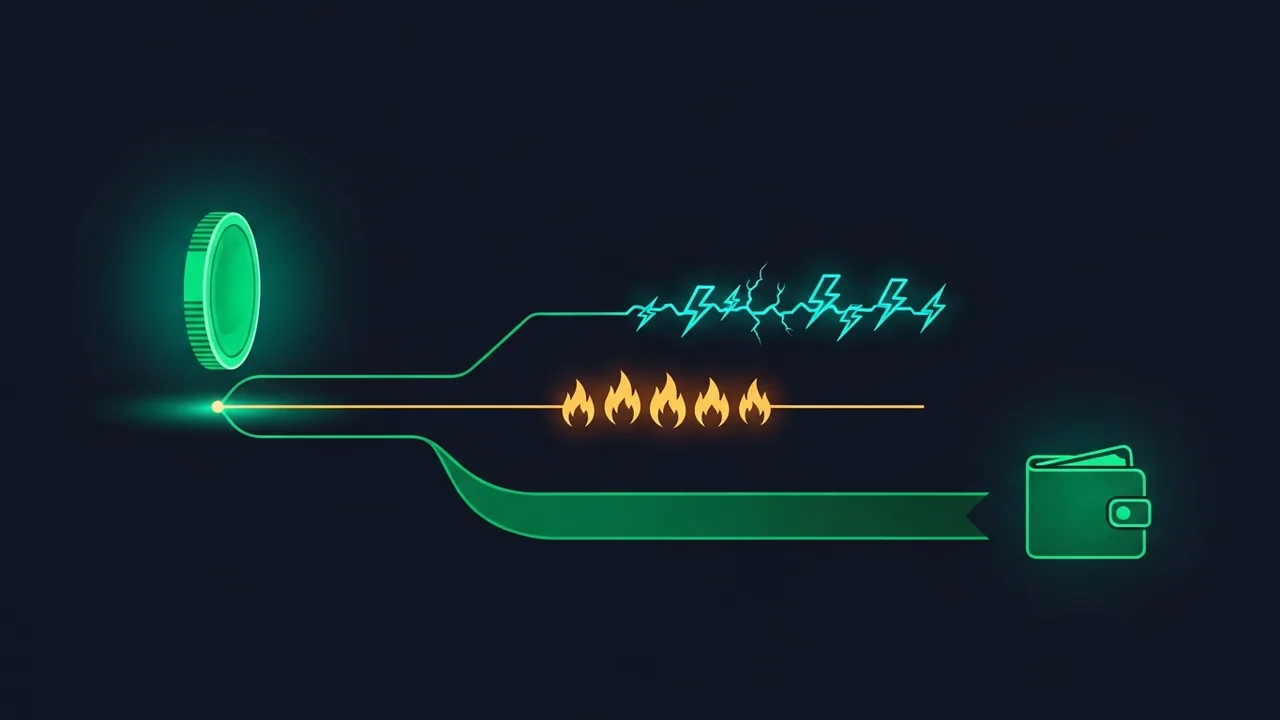
How to Send USDT Without TRX in Your Wallet: GasFree, Energy Rental, and Burning — Every Route

Accept USDT TRC20 Payments in a Bot or Service: Addresses, Fees, Mistakes

Transfer USDT Between Your Own Wallets: How to Move It for Less
Ledger USDT TRC20 and Trezor: Fees, TRON Energy and Safe Transfers

What happens when a TRON energy rental ends and how to renew it
How do I swap USDT to TRX if my wallet has no TRX at all?
Sending USDT requires energy or TRX to burn. You can rent energy and pay for it from another source, swap where your USDT already sits (on an exchange, for example), or use a service that swaps inside its own balance.
Is it cheaper to convert USDT to TRX on an exchange or with an exchanger?
It depends on the amount and where your USDT is. Exchanges usually give a rate closer to the market but charge a flat withdrawal fee. Exchangers and bots build the spread into the rate. Compare the outcome — how much TRX reached your address.
How much does a USDT to TRX swap on SunSwap cost?
There is no fixed price: it's the pool fee, slippage, and energy for the contract call and the approve. A swap usually consumes more resources than a simple USDT transfer, and the cost of energy depends on the market.
Can I buy TRX with USDT without KYC?
Yes, through a DEX from your own wallet or through services and bots that don't require exchange verification. Each platform has its own rules, and when dealing with counterparties it's worth checking their reputation and the risk score of the funds.
Do I need to swap USDT to TRX to pay transfer fees?
Not necessarily. Instead of burning TRX (about 6.5 TRX per transfer to an address that holds USDT), you can rent energy for the number of transfers you need — then no TRX is spent on the fee.
How much TRX should I keep after the swap?
A small reserve for bandwidth and activating new addresses. The network gives 600 free bandwidth per day, and a simple transfer uses about 345–360. Stockpiling TRX for USDT fees makes little sense if you use energy rental.
Which network should I use to withdraw TRX from an exchange?
The TRON network (sometimes labeled TRC-20 or TRX). If you choose another network, the coins may land in the wrong place or not arrive at all — double-check the network and address before confirming.
How do I check that the TRX from the swap arrived?
Find the transaction hash in the platform's or wallet's history and open it on Tronscan: it shows the status, the amount, and the recipient address.