Why TRON Energy Prices Differ: What Goes Into the Cost of Renting Energy
The same USDT transfer costs different amounts at different services and at different times. Here is what makes up the price of TRON energy rental and how to compare offers fairly.
In short: TRON energy prices differ because rental has no single price. It is a market where each provider builds the price from its own costs: the opportunity cost of frozen TRX, the TRX exchange rate, rental term, package size, demand at that hour, the sales channel's markup and the provider's safety margin. Above all of it sits a ceiling: if renting costs more than burning TRX for the same transfer, renting makes no sense. Below, each factor is covered separately, along with a way to compare offers so that a difference in terms is not mistaken for a difference in price.
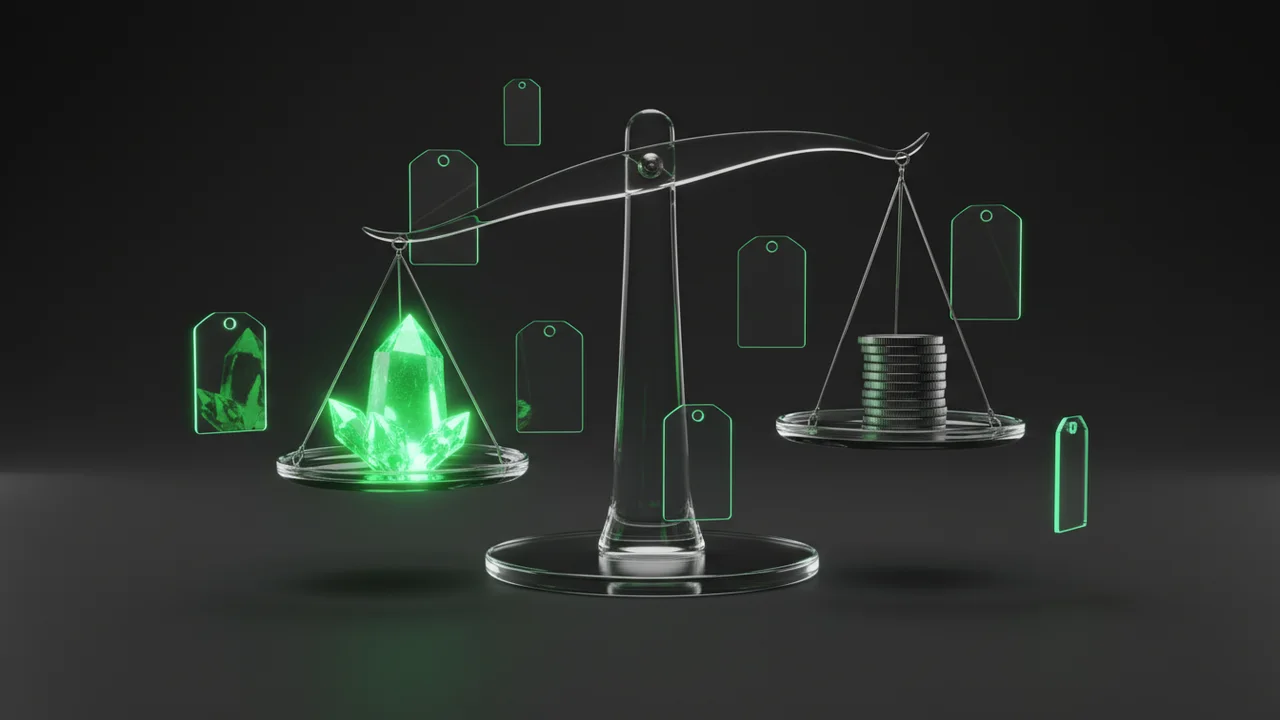
What you are actually buying when you rent energy
Energy is a TRON network resource that pays for smart contract execution. A USDT transfer is a call to the token contract, so it needs energy: roughly 64,500–65,000 for an address that already holds USDT and about 131,000 if the recipient address is empty. If you have no energy, the network burns TRX from your balance: about 6.5 TRX in the first case and about 13 TRX in the second.
Energy comes from freezing TRX in staking: the larger your share of all TRX frozen on the network, the more energy you are entitled to. An energy owner can delegate it to another address, and that is what rental is. You do not receive any keys and you do not hand over funds for custody: the right to spend part of someone else's resource arrives at your address for a limited time. We walked through how this works step by step in the guide on how to rent TRON energy.
What makes up the provider's cost
Energy has a real production cost, and it is not zero. To get energy, a provider freezes TRX, and while it is frozen the provider cannot trade it, move it or keep it on an exchange. Unfreezing takes 14 days, so this is not an instantly reversible decision. That gives the first components of the price:
- The opportunity cost of frozen capital. The more it costs the provider to keep TRX in staking, the higher the floor of its price.
- The TRX rate. Energy is produced from TRX, while the rental price is usually tied to money, so when the rate moves, so does the cost of the same resource.
- Share of the network's total stake. The amount of energy per TRX depends on how much TRX is frozen overall, and that value shifts as other participants freeze and unfreeze their coins.
- Operating costs: servers, monitoring of resource balances, order processing, support. They are small per unit of energy, but for small providers they are a noticeable share.
You do not see any of these on the order page, but each of them affects the minimum price below which selling is unprofitable for the provider.
The price ceiling: what burning TRX costs
Rental competes first of all not with other services but with the network itself. If you have no energy, TRON will deduct TRX at the energy price set by the network parameters. You can see that price in the chain parameters or on Tronscan, and it changes, since Super Representatives vote on it. So a sensible rental price is always below the cost of burning for the same transfer: otherwise the customer is better off buying nothing.
This is where the main range appears: between the provider's cost and the burn price there is a corridor in which all rates live. We compared the two paths with a formula in TRON energy vs burning TRX: which is cheaper, and we covered why the network fee itself moves in why the TRC20 fee is different every time.
Supply and demand: why the price changes during the day
Each provider's stock of free energy is finite. They delegate it to your address, and until the rental ends that energy is occupied. When many orders arrive at once, the free stock shrinks and the provider either raises the price or limits the package size. When orders are few, the price usually drops, because an idle resource earns nothing.
- Peak hours on the network. A rise in the number of USDT transfers raises demand for energy at every service at once.
- Bursts of market activity. When orders suddenly multiply, providers recalculate their rates.
- Dynamic energy of the contract. When the USDT contract is heavily loaded, the network raises the energy multiplier per call, so a transfer needs more energy at the same price per unit.
- The price at upstream providers. If a service buys energy from other providers, its rate follows theirs.
So a price seen in the morning can differ by evening, and that is normal for a market, not a sign of fraud. The signs of fraud are something else, and we gathered them in our breakdown of red flags in energy rental.
Rental term and package size
Energy is not "spent" in a rental the way fuel is: you get the resource for a term, and during that time it recovers roughly once a day. A short rental is cheaper in absolute terms but more expensive per unit of time; a long one is the opposite, but it requires the provider to set aside stock for you for the whole term. Because of this, the price of the same amount of energy for 15 minutes, an hour and a day is different.
We wrote separately about picking a term for your scenario: TRON energy rental term: 15 minutes, an hour or a day.
Package size matters too. A package for one transfer is simpler and cheaper for the provider to serve per unit than a nonstandard volume that needs stock picked by hand. Wholesale customers who order often and in volume usually get better terms than one-off buyers, because the provider can plan stock in advance.
Channel markup: bot, website, API, energy marketplace
The same energy is sold through different channels, and each has its own cost structure:
- A direct provider selling from its own stake has no chain of middlemen, but its volume is limited.
- A reseller buys energy from upstream providers and adds its own margin for convenience, support and delivery guarantees.
- Services that take payment in USDT instead of TRX build conversion and exchange rate risk into the price.
- An API for integration implies stability and support, which means a safety margin is built in.
This difference does not necessarily mean one channel is more honest than another: it reflects different services. But it explains why, for the same amount of energy, the totals at different services do not match.
How to compare prices across services
The most common mistake is comparing numbers on a storefront without comparing terms. Before deciding what is cheaper, bring the offers to a common denominator with this checklist:
- How much energy you will get. For a transfer to an address with USDT it is about 65,000, to an empty address about 131,000; a package "for one transfer" may cover a different scenario at different services.
- For how long. Energy for 15 minutes and for a day are different products.
- How the resource is delivered: delegation to your address without access to keys, or some other way. Nobody should ask for a private key or seed phrase.
- What the price includes: energy only, or also bandwidth, address activation, a conversion fee.
- In which currency and at what rate payment is calculated, and when the rate is fixed.
- What happens if the order is not fulfilled: refund, redelivery, time to resolve the issue.
- Whether you can verify the result: Tronscan shows that energy was delegated to your address and that a transfer burned no TRX or almost none.
After this exercise it often turns out that the "cheap" offer is cheaper only because of a shorter term or a narrower scenario.
How not to overpay
- Define the scenario in advance: to an address with USDT or an empty one, one transfer or a series, a resource for an hour or for a day.
- Count not the price per unit of energy but the price per transfer of your type, taking the term into account.
- Compare not with zero but with the cost of burning TRX at current network parameters: if renting is not cheaper, there is no reason to take it.
- For regular transfers, look at automatic energy refill so you do not buy the resource in a rush at peak hours.
- Do not chase the lowest price at any cost: a suspiciously low amount with no explanation of terms more often means you missed something than that the offer is good.
If you need energy on a regular basis, auto-refill of TRON energy will help, and one more way to get away from price swings is your own staking, which we calculated in TRX energy: staking or renting.
What to keep in mind about these prices
We deliberately give no specific amounts in this article: the rental cost depends on the market, the term and the service, and it goes stale quickly. If you need a current figure, check the rates on the service page on the day of your order and the network parameters on Tronscan. Any article with a "current price" and no date or source is a reason to be wary.
Different energy prices are not chaos but a sum of understandable terms: the provider's cost, demand, term, channel and the ceiling set by burning TRX. Once you bring the conditions to a common denominator, comparison becomes simple.
Current conditions and packages for your scenario are on the page where you can buy TRON energy; your status and turnover discount are shown on the Overtron statuses page. If Telegram is more convenient, order in the @overtronbot bot: give an address and a package, and the energy arrives by delegation while the keys stay with you.
Read also

Why the TRC20 Fee Is Different Every Time: What Changes the Cost of the Same USDT Transfer

What happens when a TRON energy rental ends and how to renew it

TRON Energy Rental Scam: 10 Red Flags to Check Before You Pay

Sent USDT to the Wrong Network: When You Can Get It Back and When You Can't

USDT on TON vs TRC20 vs Solana: Which Network to Use for Recurring Transfers

How Long Does a USDT TRC20 Transfer Take? Seconds On-Chain, Minutes on Exchanges
Why does the price of TRON energy differ between services?
Each provider has its own cost (the opportunity cost of frozen TRX), its own sales channel with a markup, its own stock of free energy and its own terms: duration, volume, payment currency. So the same amount of energy costs different amounts, and you need to compare offers with identical terms.
Why does the energy rental price change during the day?
A provider's stock of energy is finite and demand for USDT transfers is uneven. In busy hours there is less free resource and the price is usually higher, in quiet hours lower. The TRX rate and changes in network parameters also play a role.
Can renting energy cost more than burning TRX?
In theory it can, and then there is no point in renting. If you have no energy, the network deducts TRX at the energy price from its parameters, so a sensible rental price is below that amount. You can check the current value on Tronscan or in the chain parameters.
Does the rental term affect the energy price?
Yes. Energy for 15 minutes, an hour and a day are different offers: the provider reserves the resource for different lengths of time, so the price for the same volume differs. Pick the term to match the number and timing of your transfers.
Why does an empty address need twice as much energy, and how does that affect the price?
If the recipient has no USDT, the contract creates a new balance record, and the transfer needs about 131,000 energy instead of about 65,000. The price per unit is the same but the total per transfer is higher, so when comparing offers, take into account which address the transfer goes to.
How do I check that energy was really delegated to me?
Open your address on Tronscan and look at resources: it shows the delegated energy and its term. After a transfer, the transaction details show how much energy was used and whether any TRX was burned. If the delegation did not arrive, contact the service's support.
Is there a way not to depend on energy price swings?
You can freeze TRX in your own staking and get energy without renting, but the capital is frozen and unfreezing takes 14 days. For regular transfers, automatic energy refill also helps, so you do not buy the resource in a hurry at peak hours.
Do I need private keys to rent energy?
No. Energy is delegated to your address through the TRON network, and the recipient address is enough. Any service that asks for a private key or seed phrase is a reason to cancel the order.